Check out Johan Åhlund’s nostalgic trip to the 80s RC-car heaven to rediscover Tamiya’s cool mascots, Moko-chan and Rabbi-kun. Back then, these iconic characters weren’t just mascots—they were legends that brought life and charm to Tamiya’s marketing. From 1984 to 1989, Moko-chan and Rabbi-kun appeared in catalogs, posters, comic strips, and brochures, guiding young enthusiasts through the intricate world of RC cars. Their playful anime-inspired style captivated fans worldwide, leaving a lasting impact that collectors and RC enthusiasts still celebrate today. Let’s take a closer look at how these beloved mascots became timeless symbols of Tamiya’s golden era.
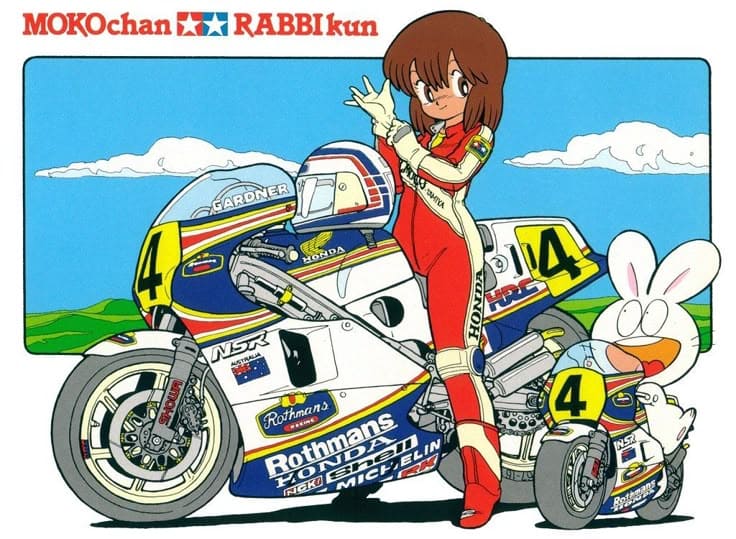
When I was a kid, remote-controlled cars always topped my wish list. Of course, this was long before the internet, so I would spend countless hours flipping through catalogs from major manufacturers like Kyosho, Tamiya, Nikko, Marui, and others. Tamiya’s catalogs were especially captivating, not just for their sleek models but also for their charming mascots—Moko-chan and Rabbi-kun. Back then, these cars weren’t nearly as reliable, fast, or well-designed as they are today.
I still remember the mixture of frustration and excitement from my first experience driving a Thunder Tiger with a glow plug engine. The sound it made and the speed it reached were incredible—especially once my friend finally managed to tune that finicky engine just right. And, of course, I also remember the awesome manga-inspired Tamiya mascots, Moko-chan and Rabbi-kun! It’s time to shine some light on these iconic PR characters and their lasting impact.
 Falling for Tamiya’s Magic
Although I admired models from both Tamiya and Kyosho, it was Tamiya that truly captured my imagination. I often dreamed of their sleek Ultima and Optima models, both equipped with electric motors. I was also fascinated by the powerful Stinger 4WD with its sharp glow plug engine.
But what really made my heart beat faster were Tamiya’s iconic designs and brilliant marketing. They didn’t just sell remote-controlled cars. Instead, they created a world of imagination and excitement. This was largely thanks to their anime and manga-inspired mascots, Moko-chan and Rabbi-kun.
The Birth of Moko-chan and Rabbi-kun
From 1984 to 1989, Tamiya made a genius marketing move. They collaborated with renowned manga artist Fujita Yukihisa to create their charming mascots. These stylish and playful characters appeared everywhere. You could find them in catalogs, brochures, on boxes, and in advertisements promoting Tamiya’s flashy RC cars.
Their purpose wasn’t just decorative. Moko-chan and Rabbi-kun actively educated young enthusiasts on how to build, repair, and enjoy their RC models. The series “RC Lecture By Moko-chan” became especially popular. It offered tips and tricks for fine-tuning and customizing cars, which was invaluable to many.
Even today, almost 40 years later, I still feel a rush of nostalgia when I see those old Japanese ads. The comic strips and catalogs where Moko-chan and Rabbi-kun explain how to build these kits still resonate with me. They remind me of how much fun it was to explore the RC car world.
Promoting Tamiya’s Models Through Art
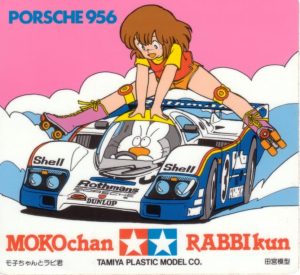
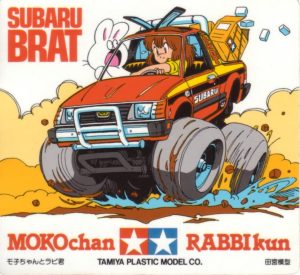 Tamiya’s marketing brilliance didn’t end with comic strips. They also released numerous posters, stickers, pins, and illustrations featuring them showcasing various models. Some of the most memorable pieces feature motorcycle themes. The mascots are shown alongside legendary bikes like the Honda NSR, Honda CR 250, Honda NXR 750 Paris Dakar (all in Rothmans livery), Suzuki RG 250 and Mike Hailwood’s potent 900CC Ducati.
Moreover, their artwork promoting the Subaru Brat, the Peugeot 205 Turbo 16 Works Rally Car, the Porsche 956, and the stunning Porsche 959 remains iconic to this day. These illustrations didn’t just showcase the cars—they captured the adventurous spirit that Tamiya aimed to convey.
The End of an Era
Unfortunately, Tamiya officially discontinued the use of Moko-chan and Rabbi-kun in the early 1990s. Despite this, their legacy lives on. Enthusiasts continue to celebrate their artwork, which blends technical precision with playful illustration. This unique combination defined Tamiya’s promotional materials during that era.
Today, while Moko-chan and Rabbi-kun are no longer active mascots, they remain beloved by collectors and model enthusiasts. Their presence in Tamiya’s history highlights how Tamiya brilliantly combined technical expertise with cultural and artistic elements to engage a broad audience. The pictures in this post are borrowed from TamiyaClub and Tamiyablog.
Looking for more artists? Here are some talented ninjas!
Thank you for stopping by, and happy exploring. Best regards, Johan Åhlund (here is my LinkedIn profile)