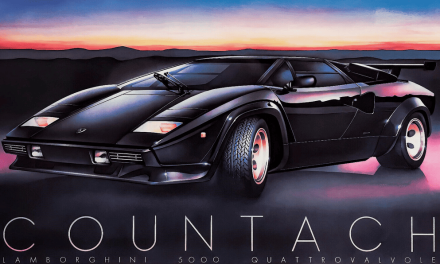
It’s probably no surprise that besides pop culture, I have a deep interest in classic cars (like the Vector W8 Supercar). Sure, I often lean toward classic sports cars—especially Italian ones with stunning designs. However, my fascination stretches across a broad spectrum. Fortunately, this passion doesn’t keep me awake at night, feeling anxious over not owning a garage packed with Koenigseggs, Lamborghinis, Ferraris, and the like. Instead, I can simply enjoy a well-written article or a car meet without the urge to take out a loan. And honestly, that’s a relief for my sanity.
Still, I can’t deny that I have a long list of dream cars. As a kid, many of them adorned the walls of my bedroom as posters. As mentioned in this article on the 80´s poster cars. Yet, one car truly left a lasting impression. It was the incredibly exotic Vector W8 Twin Turbo crafted by the innovative Jerry Wiegert (who sadly passed away on January 15th 2021). A car that, during the 90s, made my heart race a little faster.
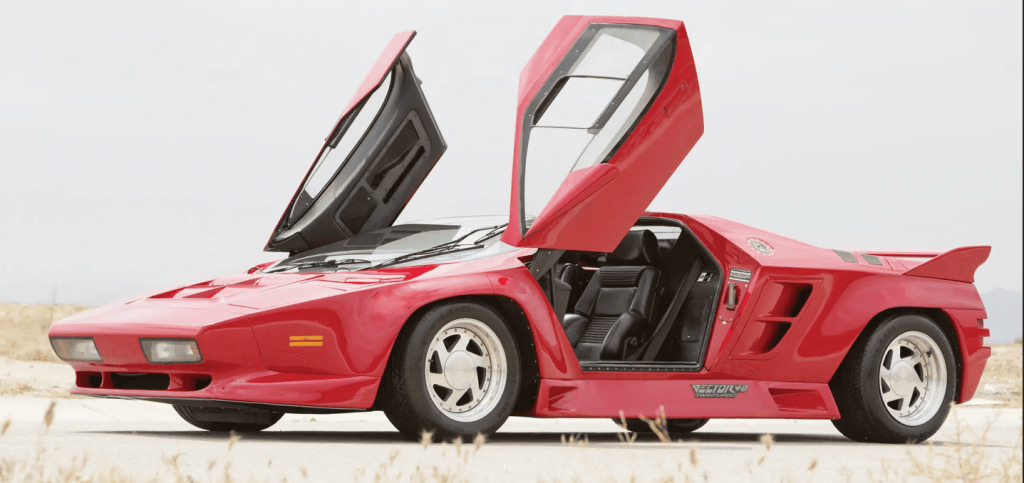
The Vector W8 supercar – by Pawel Litvinsky at RM Auctions – For more info on this car, visit RM Auctions on the link below.
Like Wiegert’s other high-tech creations, the Vector W8 Twin Turbo stood out with its unapologetically brutal design and a powerful V8 engine under the hood. In this article, I’ll dive into what made the Vector W8 such a captivating and unforgettable machine.
The Origins of the Vector W8 Supercar
The Vector W8 Supercar was never just another car. It represented a bold vision from Gerald Wiegert and his company, Vector Aeromotive Corporation. Their mission? To create an American supercar that could challenge the European giants dominating the market. With futuristic design, cutting-edge technology, and jaw-dropping performance, the Vector W8 Supercar quickly became a symbol of innovation and ambition.
Wiegert’s approach was clear: blend aerospace technology with automotive engineering. Launched in 1990, the Vector W8 aimed to disrupt the supercar world. And, for a time, it succeeded.
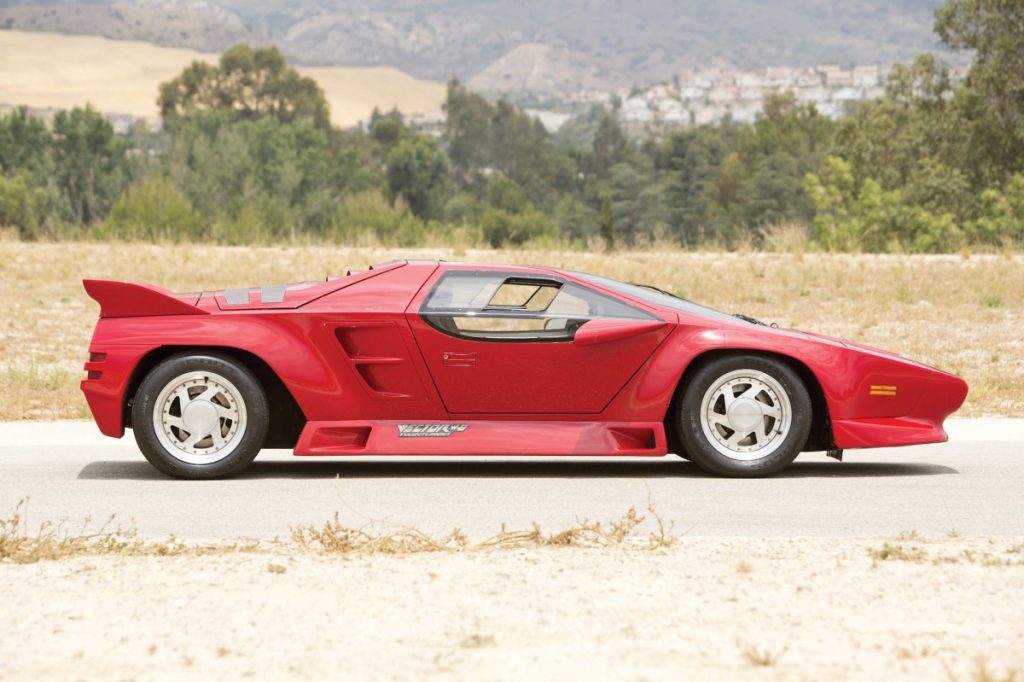
Check out that innovative and aggressive design in this sideshot.
Engineering Marvel: The Vector W8 Twin Turbos Construction
The Vector W8 didn’t just rely on looks to impress. Its engineering was equally groundbreaking. Built on a semi-monocoque chassis crafted from aluminum and reinforced with carbon fiber, the car achieved a remarkable strength-to-weight ratio. This construction method enhanced both handling and stability, allowing the W8 to compete with the best of the best.
By combining lightweight materials with advanced construction techniques, Vector Aeromotive aimed to push performance to new heights. And, without a doubt, they succeeded.
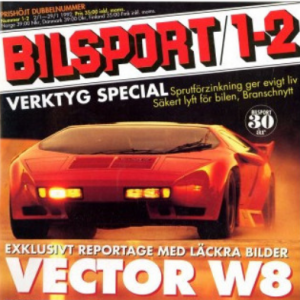
Swedish car magazine Bilsport went to USA to write an article in 1992.
Unleashing Power: The Vector W8’s V8 Engine and Twin Turbos
Under the hood, the Vector W8 came alive. Powered by a custom-built 6.0-liter V8 engine with twin turbochargers, it delivered over 625 horsepower and 649 lb-ft of torque. To put it into perspective, that kind of power catapulted the car from 0 to 60 mph in just 4.2 seconds.
Additionally, its top speed exceeded 220 mph. During the 90s, those numbers were mind-blowing. But more importantly, the engine’s twin turbochargers weren’t just for show. They demonstrated Vector’s relentless commitment to pushing performance boundaries.
This dedication extended to the Vector W8 semi-monocoque chassis, which offered unmatched rigidity and lightness. As a result, the car handled its monstrous power with precision.
A supercar made of Innovative Materials and Technologies
The Vector W8 wasn’t just about brute strength. Its technological advancements set it apart from its rivals. By using aerospace-grade materials like carbon fiber and Kevlar for its body panels, Vector Aeromotive achieved an impressive balance between durability and lightness.
Furthermore, the car’s cooling and ventilation systems were designed to maintain peak performance under extreme conditions. This innovative approach placed the Vector W8 well ahead of its time, especially in terms of engineering sophistication.
Performance and Exclusivity of the Vector W8
Exclusivity often defines a supercar’s legacy. And with only 17 Vector W8s ever produced, exclusivity was a guarantee. However, it wasn’t just scarcity that made the car special. Priced at approximately $448,000, the Vector W8 delivered performance that still impresses enthusiasts today.
Its acceleration, top speed, and engineering excellence all contributed to making the Vector W8 one of the most sought-after supercars of its era. Decades later, its legacy remains strong among collectors and fans alike.
The Vector W8 Twin Turbo Featured in Rising Sun (Chassis Number 003)
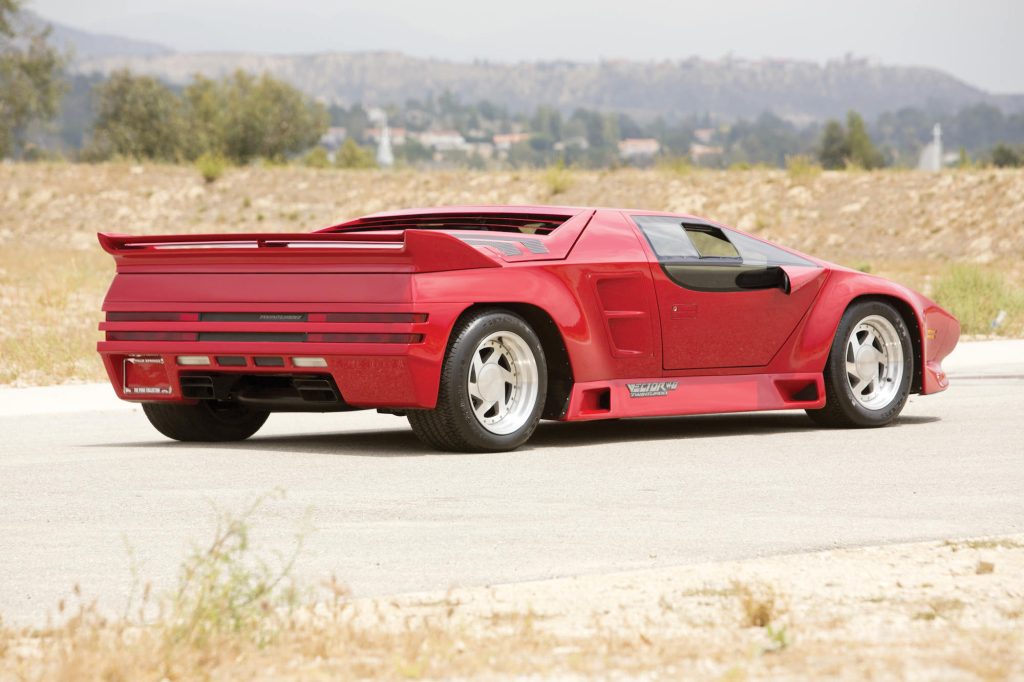
This is the red car used in the movie Rising Sun
Chassis number 003 of the Vector W8 Twin Turbo stands out not only for its rarity but also for its brief yet memorable appearance in the 1993 blockbuster Rising Sun. Built in 1991, this third production model quickly gained attention when Road & Track featured it in March of the same year.
Initially, Vector Aeromotive delivered the car to a Toys “R” Us executive. However, after only a few months, it returned to the factory for significant upgrades. During this period, engineers modified the car to meet 1992 specifications, adding a new front splitter and adjusting the vents. By April 1992, the car had officially been reclassified as a 1992 model.
What truly made chassis 003 unique was its striking red paint—a rarity among Vector W8s. In fact, only two other cars shared this bold color, including the original factory prototype. Its vivid appearance made it a standout, but its Hollywood debut took things to another level.
In Rising Sun, Wesley Snipes engages in a high-speed chase with the Vector W8 along the Los Angeles freeways. Although brief, this scene left a lasting impression on viewers and added to the car’s mystique as an American supercar. To this day, enthusiasts and collectors admire chassis 003 for its exclusivity, performance, and unforgettable role in pop culture.
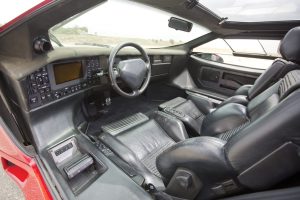
The cockpit, with its futuristic and fighter jet style. For more info on this car, and other nice photos by Pawel Litwinski visit RM Auctions on the link below.
Aerodynamic Design Inspired by Fighter Jets
Gerald Wiegert didn’t just want the Vector W8 to perform like a supercar. He wanted it to look like one from the future. Inspired by fighter jets, Wiegert sculpted a wedge-shaped body featuring scissor doors and aggressive lines. Paired with digital instrumentation and aerospace-inspired controls, the Vector W8 truly looked like something from another dimension.
Moreover, the aerodynamic design wasn’t just for aesthetics. It minimized air resistance while maximizing downforce. This design philosophy influenced supercar aesthetics for years to come.
The Legacy of the Vector W8 Twin Turbo
Although the Vector W8 was eventually succeeded by the Vector M12, it remains the most iconic model in the company’s history. Throughout the 90s, it competed with legends like the Ferrari F40, Lamborghini Diablo, and Bugatti EB110.
Yet, the Vector W8 stood out. Its ambitious blend of automotive and aerospace technologies was a rarity in the supercar world. And that ambitious spirit cemented its place in automotive history.
The Discontinuation of the Vector W8
Unfortunately, financial challenges, changing market trends, and the difficulty of maintaining cutting-edge innovation eventually led to the end of the Vector W8’s production. However, its legacy continued to grow, supported by appearances in video games, movies, and broader car culture.
Final Thoughts on the Vector W8
The Vector W8 isn’t just a collector’s item or a nostalgic footnote. It’s a testament to Gerald Wiegert’s daring vision and dedication to innovation. The Vector W8 continues to inspire automotive enthusiasts and engineers, proving that passion and creativity can leave a lasting mark on history. For more info and amazing photos by Pawel Litvinsky on the red car from Rising Sun, visit RM Auctions. For more cars and bikes, check out the Cars & Bikes category here at Legends And Nostalgia.
Thank you for stopping by, and happy exploring. Best regards, Johan Åhlund (here is my LinkedIn profile)